

The Mistake That Saved Millions: U.S. Overlooks Quartzite, and Brazil Breathes Easier

Quartzite Escapes U.S. Tariff Hike Thanks to Market Ignorance
A curious fact may have saved millions of dollars for Brazil’s ornamental stone industry: the widespread lack of understanding about what quartzite actually is. This natural, highly durable stone—gaining traction in high-end design projects—was left out of the 50% tariff the United States imposed on various Brazilian products starting in August 2025. And the reason might not have been technical. It may have been semantic.
The new tariff targets raw blocks and slabs of granite and marble. But polished or brushed quartzite, when properly classified, was spared. A loophole that became a lifeline for the industry—and one that seems to have flown under the radar precisely because the term “quartzite” is almost invisible in global and U.S. search trends.
Google Trends Reveals the Paradox
Analyzing Google Trends data between August 2024 and July 2025 shows a glaring discrepancy. While “Marble” and “Granite” dominate search queries both globally and in the U.S., “Quartzite” barely registers in the minds of end consumers, architects, and even some specifiers.

In the U.S., during the week of July 27 to August 2, 2025:
Marble: 98
Granite: 90
Quartzite: 7

Worldwide, during the same week:
Marble: 100
Granite: 69
Quartzite: 5
This digital invisibility may have made all the difference. By leaving quartzite out of the tariff list, U.S. regulators may have simply followed market trends: they looked at what was most searched, most recognized, and most labeled… and overlooked the more technical, less popular term.
The Confusion Starts with the Industry Itself
It’s not just the end consumer who gets it wrong. In Brazil, it’s common to see companies labeling quartzite as “marble” or “granite” to make communication easier. It’s marketing. It’s habit. And it’s also a reflection of a market that has yet to educate its audience—including the professionals who influence material choices.
Architects, interior designers, and even suppliers often use “granite” as a catch-all term for any polished stone. And ironically, that helped. When the technical term “quartzite” appeared in the tariff lists, it flew under the radar. And what should have been an exception became a competitive advantage.
So, What’s the Difference Between Them?
Granite is an igneous rock, hard and composed of quartz, feldspar, and mica. It’s highly resistant and widely used for countertops and outdoor areas.
Marble is a metamorphic rock formed from limestone. It features striking veining, a smooth, silky feel, and higher porosity.
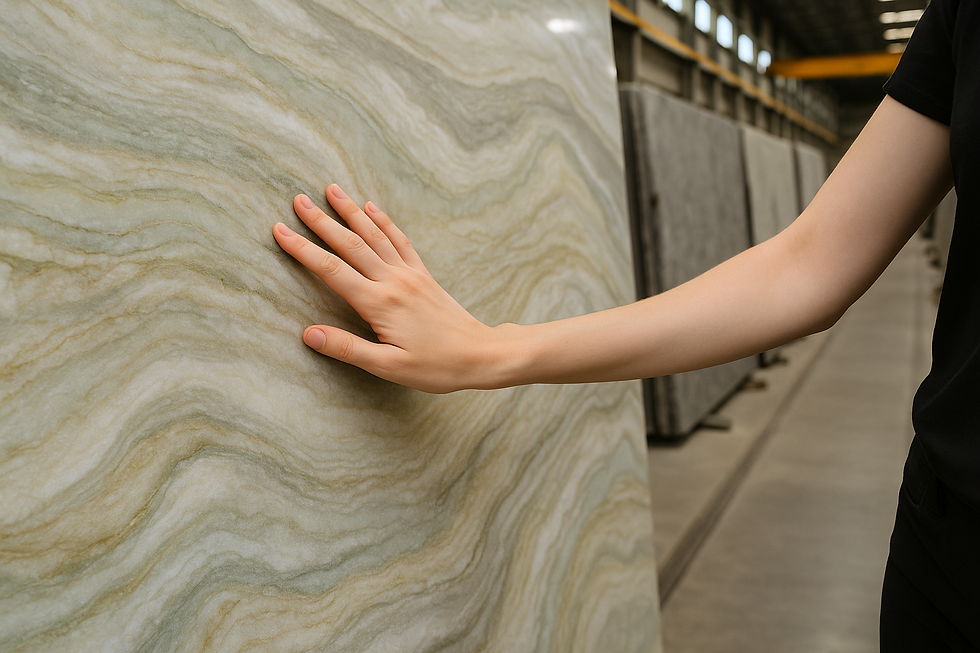
Quartzite is also metamorphic, but formed from sandstone. It’s harder than granite, has an appearance similar to marble, and offers high resistance to scratching and heat. In other words: it combines beauty and performance.
Opportunity or Warning?
The temporary “salvation” of quartzite shows how a lack of awareness can sometimes offer protection. But it also exposes the urgent need for the industry to educate the market, standardize terminology, and communicate more clearly.
Because in the next round of tariffs, luck might not be on our side. And if the name is wrong on the invoice, the packing list, or the technical report, the penalty will come—with a code and a fine.
For now, quartzite’s obscurity became its shield.But the industry must decide:Do we want to remain invisible... or become truly relevant?




Comments